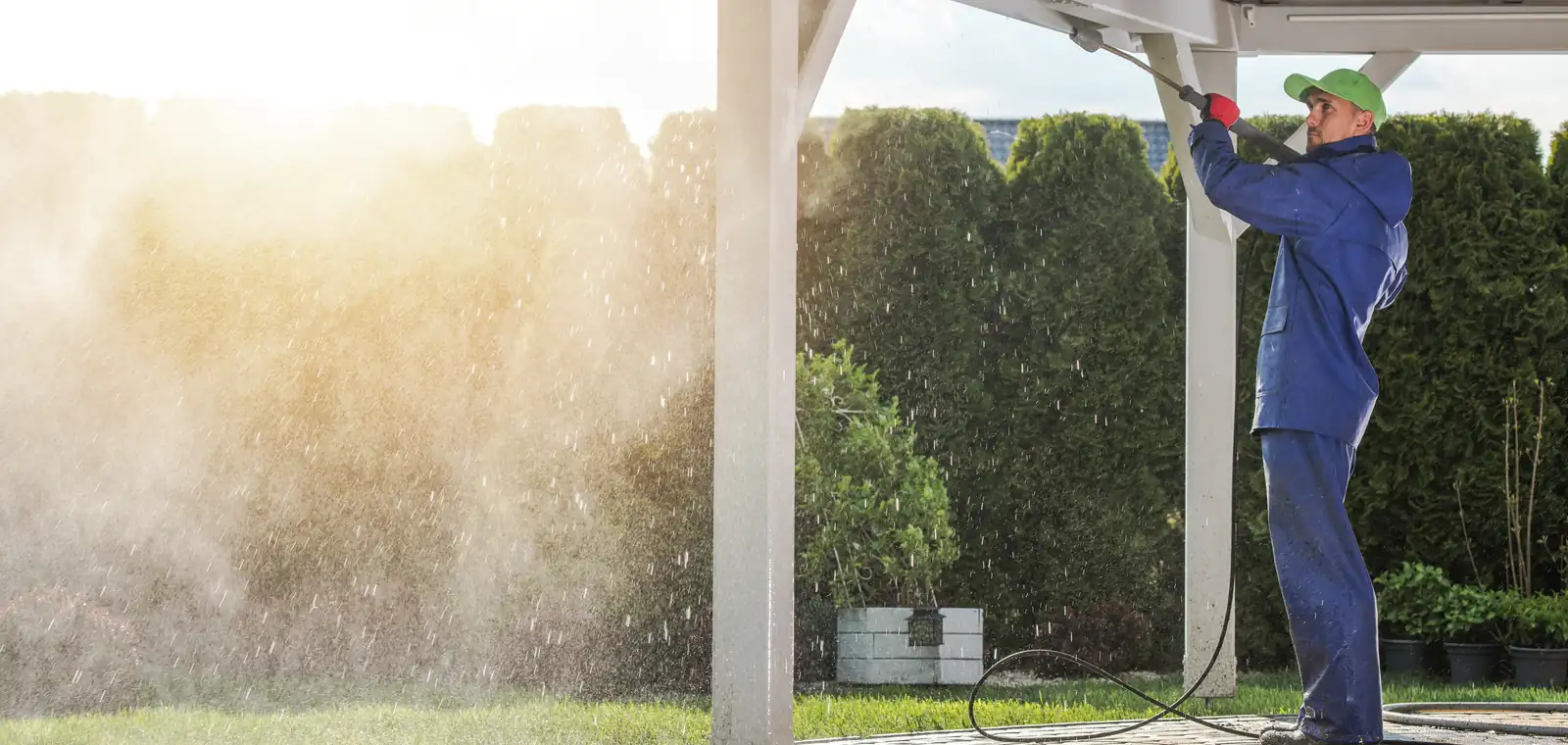
When a fire season settles over the North Bay, the smoke leaves more than a hazy sky. A fine film of ash and soot lands on stucco, wood siding, trim and window frames, and it stays there long after the air clears. If you plan to repaint, the first job is to clean smoke damage off house exterior surfaces properly, because fresh paint applied over that residue will not hold.
The right method depends on what your home is made of and how heavy the deposit is. In most cases the answer is a low-pressure soft washing service that lifts soot with cleaning solution rather than force, followed by a careful look at whether the existing paint still has life in it. This guide walks through why paint fails over smoke residue, how to test your surfaces, which cleaning method suits which material, and when cleaning alone is enough.
Key takeaways
- Paint does not bond to ash or soot, so every surface must be cleaned and fully dry before any coating goes on.
- A simple wipe test and tape test tell you how much residue is present and whether the old paint is still sound.
- Soft washing suits stucco, painted siding and trim, while pressure washing is generally kept for concrete and other hard flatwork.
- Treat ash as a health hazard: wet it down instead of sweeping it dry, and wear gloves, eye protection and a well-fitted N95 respirator.
Why does paint fail over ash and soot?
Soot is made of very fine, oily particles produced when wood, vegetation and building materials burn. It works its way into the texture of stucco and the grain of wood, and it sits on top of painted surfaces as a greasy film. Paint needs a clean, dull, dry surface to grip. Over soot, the new coat bonds to the residue instead of the house, and the residue lets go. The result is peeling, poor adhesion and patchy color, sometimes within a single season.
Ash brings a second problem. Wet ash can be caustic, and residue left on a surface through a rainy winter can etch or stain the existing coating. Soot can also bleed through light colors, showing up as a gray or yellow shadow under a fresh topcoat. Cleaning first, and sealing with a stain-blocking primer where staining remains, is what keeps a repaint from failing early.
How to test your surfaces before you clean smoke damage off house exterior walls
Before choosing a method, spend a few minutes checking each side of the house. Smoke rarely settles evenly. Walls that faced the prevailing wind during the fire, eaves where air stalls, and textured stucco usually hold the most residue.
These checks give you a clear picture of what you are working with:
- Wipe test: run a clean white cloth across the wall. A gray or black smear means soot is present, and an oily feel means it needs a cleaning solution, not just water.
- Tape test: press a strip of masking tape onto the paint and pull it off sharply. If flakes of paint come away, the coating is failing and will need more than a wash.
- Water test: mist a small area. Water that soaks in quickly on stucco or wood can mean the existing paint has worn thin.
- Look closely at window frames, light fixtures, gutters and metal railings, where soot can show up as dark streaks or early corrosion.
Soft washing vs pressure washing to clean smoke damage off house exterior surfaces
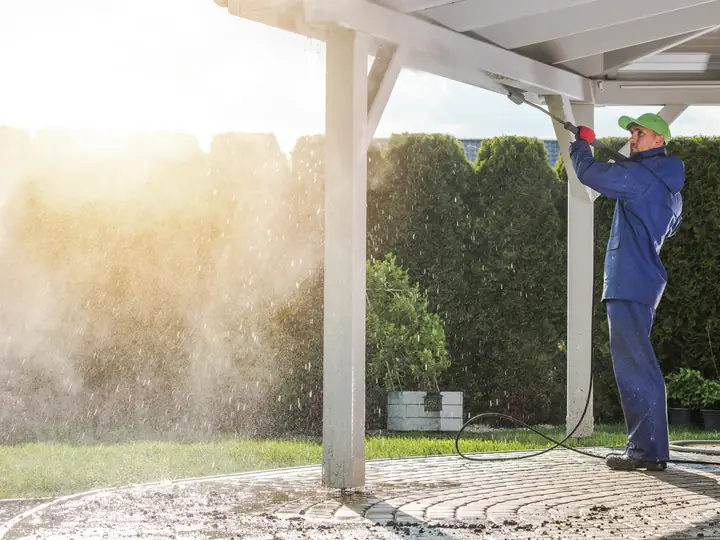
High pressure feels like the fast answer, but on most of a house it does more harm than good. Pressure can drive soot deeper into stucco, raise the grain on wood siding, force water behind trim and into wall cavities, and strip paint that was still sound. Soft washing uses low pressure and a cleaning solution matched to the residue, which loosens soot so it rinses away without damaging the surface underneath.
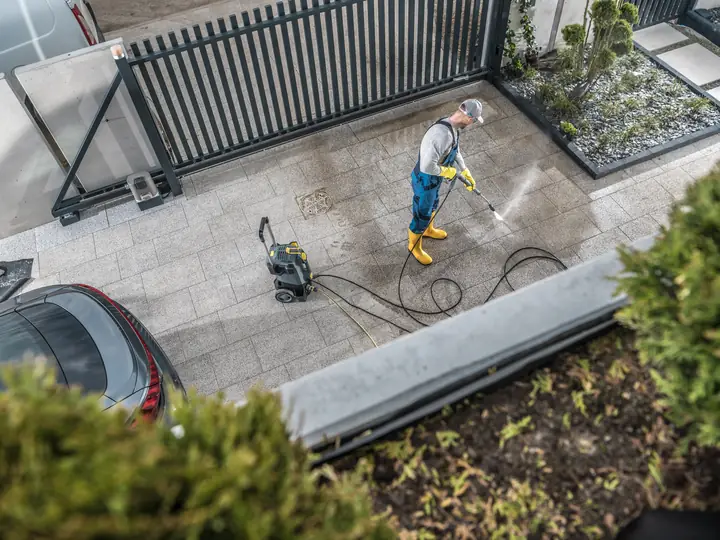
As a general guide, soft washing suits stucco, painted wood siding, fiber cement, trim, eaves and older homes with delicate detail. Pressure washing is better kept for concrete driveways, walkways and other hard, unpainted flatwork, where ash tends to collect and where higher pressure will not cause damage. Windows, screens and landscaping should be protected during either method, and wash water should be kept out of storm drains where possible, since it carries ash and cleaning residue.
Safety and timing after fire season
Ash from wildfires, and especially from burned structures, can contain hazardous material. Public health guidance in California recommends wearing gloves, long sleeves, eye protection and a well-fitted N95 respirator when handling ash. Avoid sweeping it dry or using a leaf blower, which puts fine particles back into the air. Lightly mist ash first, then clean. If your property sits near burned structures, check local guidance before doing any cleanup yourself.
Timing matters too. Wait until the smoke has cleared and air quality has improved before working outside. It is better to have the exterior cleaned before the winter rains arrive, so residue does not sit wet on the surface for months. Cleaning can happen in cooler weather, but any repainting should wait until surfaces are fully dry and the weather suits exterior work.
When to repaint and when cleaning is enough
If the wipe test comes back clean after washing, the tape test shows good adhesion and the color has not shifted, cleaning may be all your home needs. Many exteriors look noticeably brighter once the film is gone.
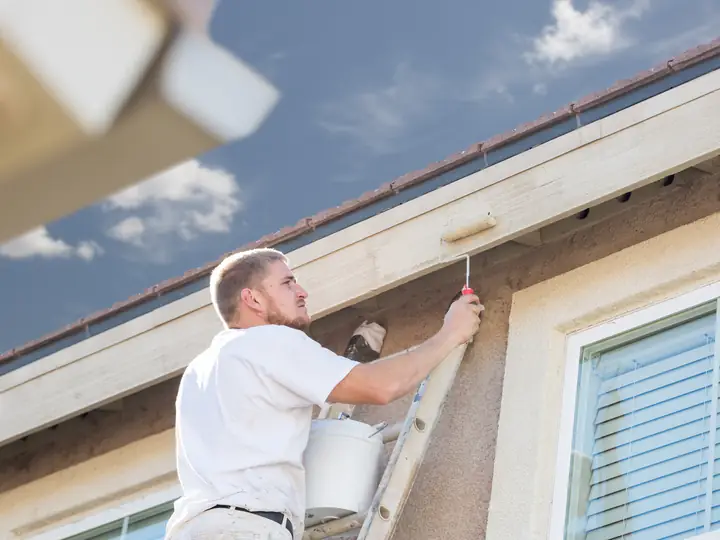
Repainting makes sense when the paint was already chalking or peeling before the fire, when soot staining remains after a thorough wash, or when the tape test pulls paint away. In that case the cleaned surface is sanded or scraped where needed, primed with a stain-blocking primer over any discolored areas, and finished with two coats. That is standard practice on our exterior painting projects, and it gives the new finish a sound base to bond to.
A brief note on smoke odor inside the home
Smoke often finds its way indoors through vents, gaps and open windows. Replacing HVAC filters and washing walls and ceilings with a suitable cleaner usually helps. If odor or staining lingers on painted walls, an odor-sealing primer, such as a shellac-based product, can lock it in before a fresh coat goes on. Homes with direct fire damage should be assessed by your insurer or a restoration specialist first, since that work goes beyond cleaning and painting.
The next step
Taking the time to clean smoke damage off house exterior surfaces properly is what makes the difference between a repaint that lasts and one that peels. Test first, choose soft washing for stucco, siding and trim, keep higher pressure for concrete, and protect yourself from the ash. If you would rather have it assessed by a professional, Nex-Gen Painting provides soft washing for smoke and soot residue across Solano, Napa and Sonoma counties, along with repainting when the surface calls for it. Our work is backed by a workmanship guarantee. For a free written estimate, call or text (707) 397-9661. We answer around the clock, 24/7.
Frequently asked questions
Can I paint directly over smoke residue on my house?
No. Paint bonds to whatever is on the surface, and soot is oily and loose, so a coat applied over it tends to peel and can let stains bleed through. The surface needs to be washed, rinsed, fully dried and checked with a wipe test first. Any staining that remains after cleaning should be sealed with a stain-blocking primer before the topcoat goes on.
Is pressure washing safe for removing soot from stucco?
High pressure is generally not recommended on stucco. It can push soot deeper into the texture, force water behind the surface and damage the finish. Soft washing uses low pressure with a cleaning solution that loosens the residue so it rinses away gently. Pressure washing is better suited to concrete driveways and walkways, where higher pressure will not cause harm.
How soon after a fire can I have my exterior cleaned?
Wait until the smoke has cleared and local air quality has improved, and check any public health guidance for your area, particularly if burned structures are nearby. After that, sooner is better. Cleaning before the winter rains keeps wet ash and soot from sitting on the surface for months. Repainting should wait until the surfaces are completely dry and the weather suits exterior work.

Ismael is the owner of Nex-Gen Painting LLC in Vallejo. He and his crew paint homes and businesses across Solano, Napa and Sonoma counties. Call or text (707) 397-9661 with a question about your project.